In 2026, putting a customer’s name in an email subject line is no longer “personalization”- it is the bare minimum.
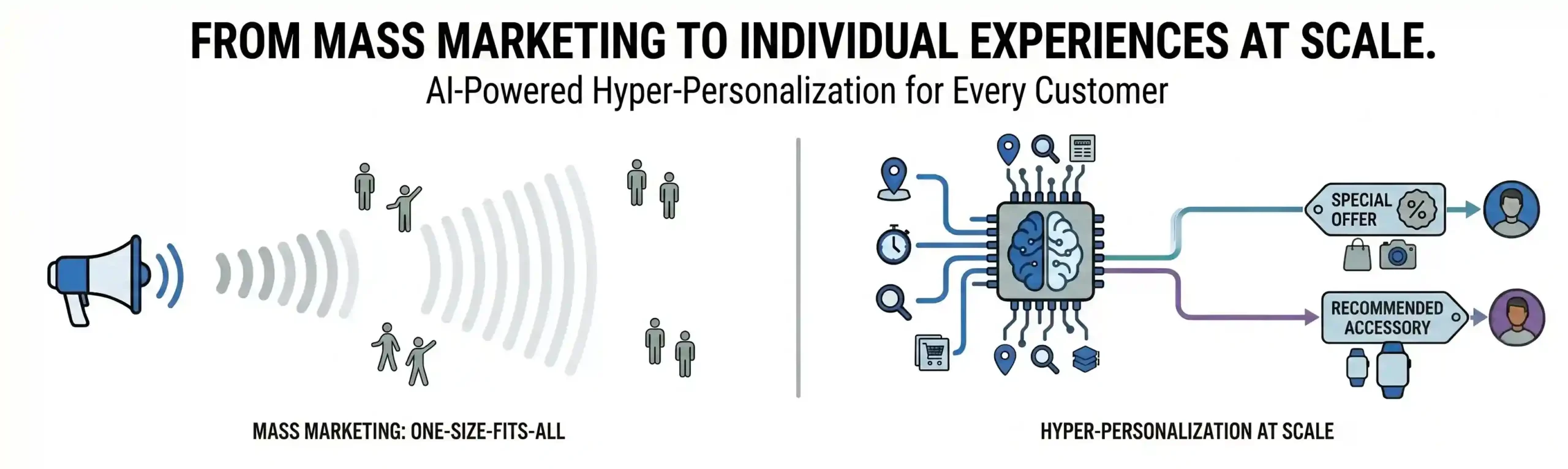
Most businesses struggle with a specific paradox: they want to treat every customer like their only customer, but they have thousands of people to serve. Historically, you had to choose between being personal (one-on-one manual outreach) or being scalable (generic mass broadcasts).
Through Hyper-Personalization, AI has removed this choice. Businesses can now deliver unique, relevant experiences to every single user at the same time, without increasing the manual workload of their staff.
Defining Hyper-Personalization in Today’s Market
Hyper-personalization uses real-time data and AI to understand a user’s specific context. While standard personalization looks at who a customer is (their name or location), hyper-personalization looks at how they behave.
It tracks what they view, when they are most active, and what specific problems they are trying to solve. The system then adjusts the website, the emails, and the offers to match that specific individual instantly.
How AI Enables Personalization for Thousands of Users
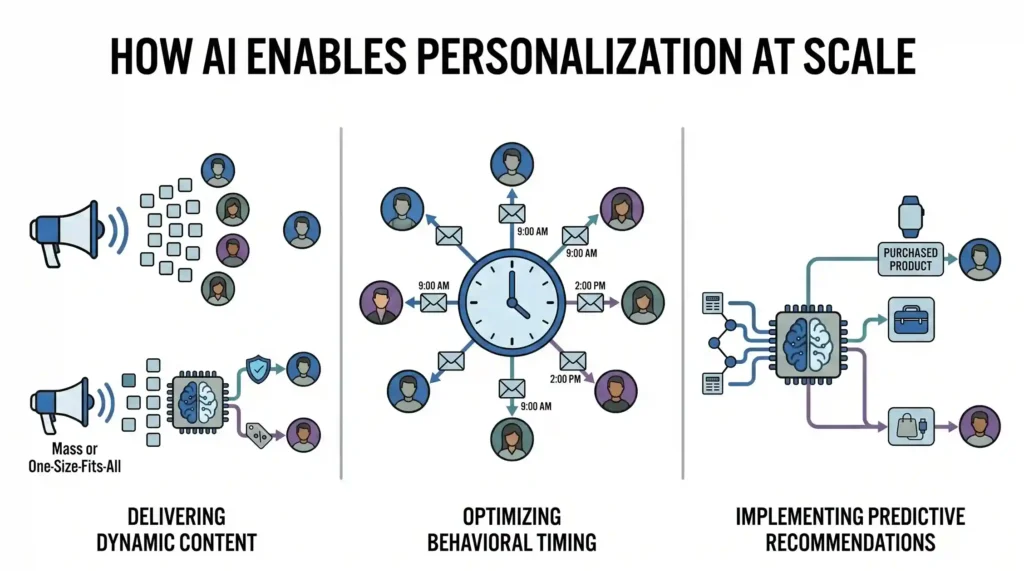
At Nuclay, we build systems that move away from “one-size-fits-all” marketing. Here is how AI manages this process at scale:
1. Delivering Dynamic Content
Instead of sending the same newsletter to 5,000 people, an AI-driven system generates different versions based on individual interests. If a customer spent time looking at “Security Features” on your site, the AI automatically ensures their next email or homepage view highlights your security protocols, rather than generic information.
2. Optimizing Behavioral Timing
Not everyone checks their inbox at the same time. Hyper-personalization tools analyze when each specific user is most likely to engage with your brand. The system then sends the content to them at their preferred time, significantly increasing the chances of the message being seen and acted upon.
3. Implementing Predictive Recommendations
Based on a user’s past actions and the behavior of similar customers, AI can predict what a user will need next. This is the difference between showing a customer a product they already bought and showing them the specific accessory or service they didn’t know they needed yet.
The Business Benefits of Individualized Experiences
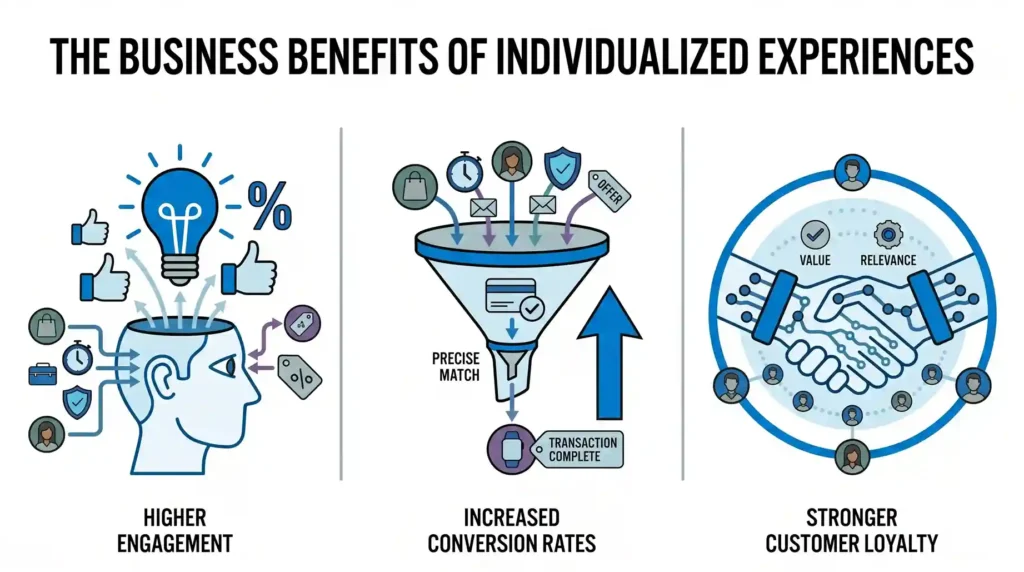
When you stop treating your audience like a large group and start treating them as individuals, the measurable results follow quickly:
- Higher Engagement: People pay more attention to content that feels specifically curated for their needs.
- Increased Conversion Rates: When the “Next Step” you suggest to a user is exactly what they were looking for, they are much more likely to complete the transaction.
- Stronger Customer Loyalty: Customers stay with brands that provide consistent value. Hyper-personalization builds trust by providing relevant information rather than digital noise.
Achieving Technical Scale with Nuclay
The biggest hurdle to hyper-personalization is often “Fragmented Data.” If your information is spread across different spreadsheets and old databases, an AI cannot learn from it effectively.
Nuclay Solutions specializes in organizing your data architecture and building the “intelligence layer” on top of it. We help you move from generic outreach to a high-performance system where every interaction is personalized, automated, and designed for growth.
Generic Blast or Individual Impact?
Stop sending generic messages. Connect with the Nuclay team to deliver the right message to every individual at scale.
Scale Your Personalization